1
Tell us what you want
A short conversation. No judgment, no jargon.
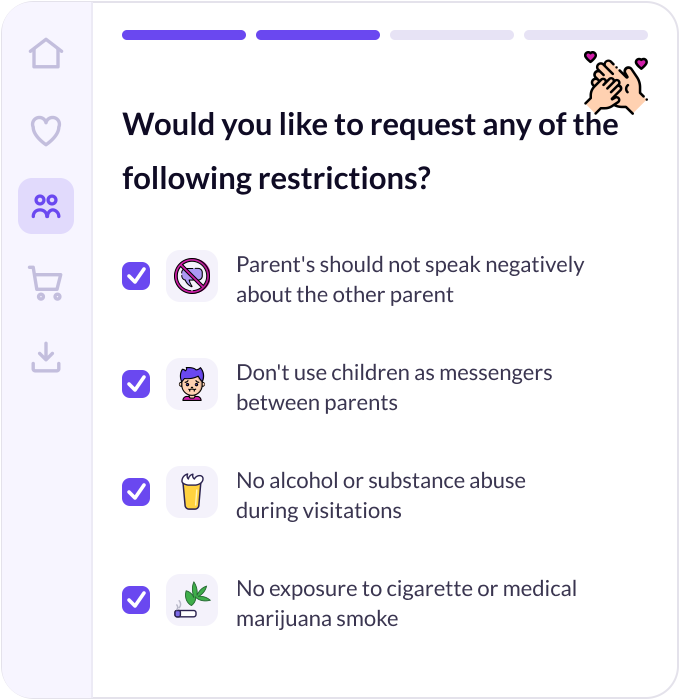

Ask the Court for Travel Limits.

Travel & Abduction Prevention
You don't have to just hope they'll come home. The court can put specific, enforceable limits on your children's travel. Here's what parents most often request:
Ask that the children not be taken outside the county, state, or country without both parents' written consent or a court order.
Ask that existing passports be surrendered or held, and that no new passports be issued for the children without the court's or both parents' sign-off.
Ask that any trip come with written notice, dates, destinations, flight numbers, and a reliable way to reach the children.
When there's genuine risk, ask the court for targeted protections built around your family's specific situation.
Ask that the traveling parent post money the court holds — a financial guarantee that the children come home as promised.
Ask for exchanges at set times in public places — or supervised handoffs — so trips begin and end on the record.
When the risk is immediate, courts can grant same-day temporary orders that hold until a full hearing.
Urgent RiskJudges weigh specific risk factors in abduction-prevention requests — ties to another state or country, past threats to take the children, quitting a job or selling a home. Our wizard asks about each factor in plain language and puts your answers exactly where the court expects to find them.
We meet you where you are
The fear that your ex might take your children and not come back is one of the loneliest there is — it sounds paranoid out loud, right up until it isn't. Family courts hear this fear regularly and have specific orders for it. Start with the sentence that sounds like yours.
 You can ask the court to require written consent — yours or a judge's — before the children leave the county, state, or country. A vague 'visit' with no return date is exactly what these orders exist to address before it happens.
 Courts can order existing passports surrendered or held, and that no new passports be issued without both parents' or the court's approval. There's even a federal alert program for children's passports — but it starts with getting orders on paper.
 Advance written notice, full itineraries, flight numbers, an address, a working phone number — these are reasonable, specific conditions a judge can attach to any travel with your children. Not knowing where your kids are shouldn't be normal.
 Many family courts have a dedicated request for this: an abduction-prevention order. Judges weigh specific risk factors — ties abroad, past threats, sudden life changes — and can order supervised travel, held passports, or no travel at all.
 Threats to disappear with children are taken seriously by family courts, and there's an emergency (ex parte) process when risk is immediate. If your children are in danger right now, call 911 first. For everything short of that, the paperwork is how you act on the threat instead of just living with it.
Answer plain questions about your situation — we turn them into a court-ready Request for Order, with an abduction-prevention attachment when your answers call for it. Nothing is filed until you say so, and every form carries our 100% court-acceptance guarantee.
Before you go it alone
Travel and abduction-prevention requests are where a missed attachment or an unstructured declaration hurts most: the judge needs specific risk factors, stated clearly, in the right place — not scattered through an anxious retelling.

An FL-300 rarely files alone — one missing companion form and the clerk can bounce the whole packet.

Those boxes decide what the judge is asked to order. The wrong one gets your request misread — or denied.

Judges read hundreds of pages a day. A declaration that vents instead of explains buries your ask.

Served the wrong way, or a day late, and your hearing slips while the problem keeps going.
This is exactly why people hand us the paperwork: every form picked, filled, and consistent — for one flat price, with our 100% court-acceptance guarantee.

Why we exist
We built Legalfina because you shouldn't have to spend $4,000 on a lawyer to fill out a form. Attorneys are worth every dollar for the hard stuff — standing up for you in court, fighting a truly contested case. But filing your initial divorce, custody, or restraining-order paperwork isn't that. It's the same court-accepted result, without the bill.
The process
A short conversation. No judgment, no jargon.
Every form and every question, answered in plain English you actually understand.
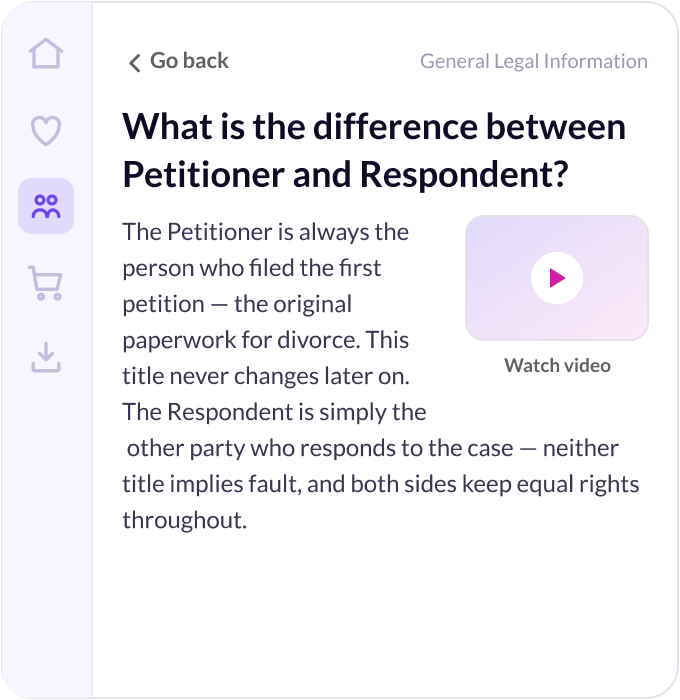
Plain English. Change anything. Ask us anything.
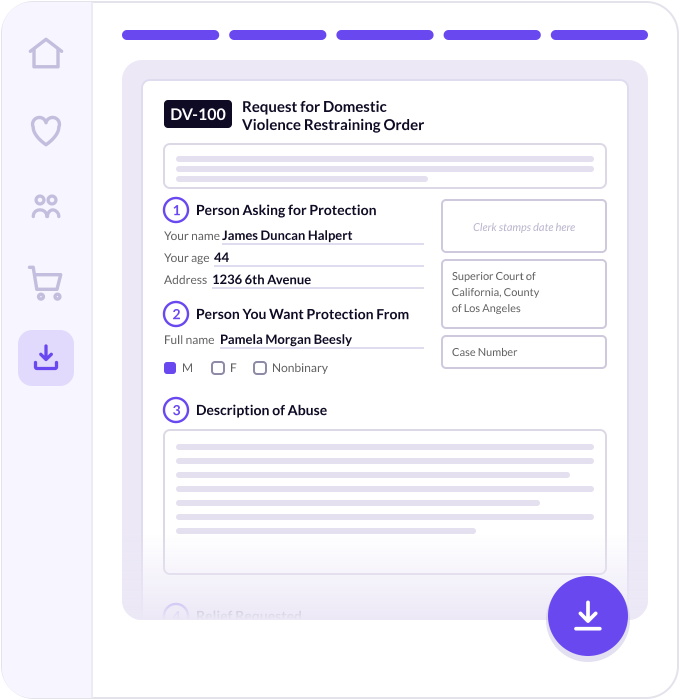
A few plain questions to get started.
Built for California
Family law is local. A filing that flies in San Francisco gets kicked back in San Bernardino. We know the quirks of all 58 California counties — because we've walked into all of them.
One flat price
One honest number for the whole case. Tell us what you're doing — we'll show you exactly what it costs, whether you're filing first or answering your ex's paperwork.
Questions, honestly answered
If yours isn't here, write us. A human will answer, usually the same day.
Yes. California family courts routinely order that children not be removed from the county, state, or country without written consent or court permission — and can add passport controls, notice requirements, supervised exchanges, and bonds. The court can't act on your fear until it's asked properly; that's what the Request for Order is for.
The FL-312 is California's Child Abduction Prevention Order attachment — it rides along with the FL-300 Request for Order when a parent asks for protections against a child being taken. It's where the specific risk factors and the specific protections you're requesting get laid out. Our wizard fills it out from your answers automatically.
California law lists concrete factors: past threats to take the children or a history of hiding them, no strong ties to California, ties to another state or country, sudden moves like quitting a job or selling a home, and more. You don't need all of them — you need the ones that exist in your situation, stated specifically.
Courts can order U.S. passports surrendered and block new ones, and the federal Children's Passport Issuance Alert Program can flag passport applications for your children. Foreign passports are harder, because U.S. courts can't control another country's documents — that's precisely when protections like bonds, supervised travel, or no-travel orders matter more. Dual-citizenship situations are worth an attorney consultation, which you can add anytime.
It's money the traveling parent deposits (or posts through a bond company) before traveling with the children, which can be forfeited if the children aren't returned as ordered. It converts a promise to come home into a financial guarantee — and it's one of the specific protections you can request.
California's ex parte process is designed for immediate risk: with proper notice to the other side, a judge generally reviews the request within a court day or two, and temporary orders can issue the same day they're granted, holding until a full hearing. The paperwork has to be precise — errors are how emergency requests lose their 'emergency.'
Yes — travel restrictions are typically requested as part of custody orders, and if you don't have a case open yet, our wizard helps you start one. Parents worried about travel usually ask for their first custody order and the travel protections in the same request.
That's beyond paperwork — contact law enforcement immediately, and know that California district attorneys have child abduction units that help locate and recover children. Court orders still matter enormously in a recovery, which is another reason parents get them in place at the first warning sign, not the last.
No — we're a licensed and bonded Legal Document Assistant service. We prepare your paperwork, and every step of our wizard is reviewed and approved by attorneys licensed in your state. Abduction-risk situations can genuinely benefit from legal advice — you can add an attorney consultation anytime.
Filling out your forms is free — you pay one flat price when you're ready to download or file, with payment plans available. The court's own filing fee is separate, and if that's a hardship we prepare the fee waiver paperwork too.
Peace of mind
Checking flight prices to countries you've never visited, counting days until the next exchange — that vigilance is exhausting, and you shouldn't have to carry it alone.
Let Legalfina prepare your travel-restriction paperwork quickly, affordably, and on your terms.
 Refer your friends
© 2021 - 2026 Legalfina Inc. All rights reserved.
LDA License #172 (Alameda County)
35111F Newark Blvd #314, Newark, CA
408-673-0810
