1
Tell us what you want
A short conversation. No judgment, no jargon.

Ask the Court Who Controls What.
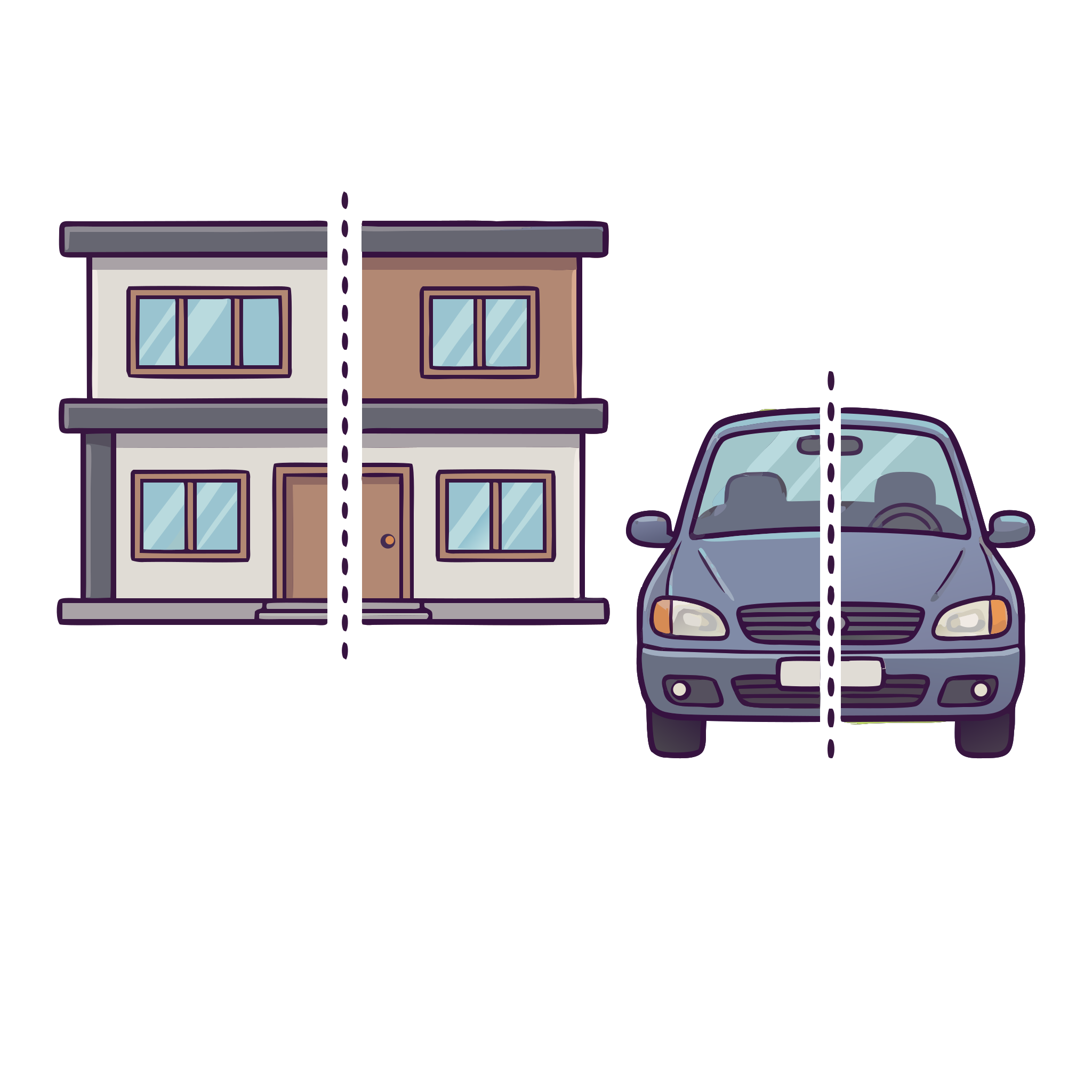
Property Control Orders
While your case is pending, the court can decide who uses, keeps, and pays for what — before anything is finally divided. Here's what's most often requested:
Ask that one spouse have temporary exclusive use and possession of the family home while the case is pending.
Ask the court to decide who drives which car — and who makes the payments and carries the insurance on it.
Mortgage, rent, utilities, minimum payments — ask for clear temporary orders so nothing critical goes unpaid out of spite or confusion.
Ask for orders preventing property from being sold, moved, hidden, borrowed against, or given away before it's divided.
Ask that neither spouse run up new debt in joint names or against shared property while the case is pending.
Ask for the return of specific items — tools, documents, a pet, family keepsakes — that the other side is holding.
Ask for orders that health, auto, and home insurance stay in place — canceling coverage mid-case is a classic, preventable move.
These are temporary orders about control, not the final division of property — that comes later in the case. Getting them right early is how you make sure there's still something left to divide.
We meet you where you are
Between separation and a final judgment there's a long, vulnerable stretch where houses, cars, accounts, and bills all sit in limbo. Courts can put temporary rules on all of it. Start with the sentence that sounds like yours.
 Once a divorce is filed, automatic restraining orders printed on the summons restrict both spouses from unusual transfers — and when money moves anyway, you can ask the court for orders to account for it and to control what's left. Acting quickly matters more here than almost anywhere.
 You can ask the court to prohibit selling, transferring, hiding, or borrowing against property while the case is pending — and to decide who uses what in the meantime. A threat made in anger is easier to stop before it becomes a bill of sale.
 One of the most common temporary orders is exclusive use of the family home — one spouse stays, the other moves out while the case is pending. It doesn't decide who keeps the house forever; it decides who lives in it now. Where there's violence or threats, faster emergency paths exist too.
 Missed payments can wreck your credit and drain the very asset you're fighting about. You can ask the court to order who pays which bills — mortgage, rent, insurance, utilities, minimum payments — while everything gets sorted out.
 Whose name is on the account or title isn't the end of the story. You can ask for temporary orders about who uses the car, who stays in the home, and who pays what — based on your life, not just the paperwork trail your ex controlled.
Answer plain questions about your home, cars, accounts, and bills — we turn them into a court-ready Request for Order asking for the property orders you need. Nothing is filed until you say so, and every form carries our 100% court-acceptance guarantee.
Before you go it alone
Property requests demand precision: a vague description, a missing account detail, or the wrong checkbox can leave the exact asset you're worried about unprotected.

An FL-300 rarely files alone — one missing companion form and the clerk can bounce the whole packet.

Those boxes decide what the judge is asked to order. The wrong one gets your request misread — or denied.

Judges read hundreds of pages a day. A declaration that vents instead of explains buries your ask.

Served the wrong way, or a day late, and your hearing slips while the problem keeps going.
This is exactly why people hand us the paperwork: every form picked, filled, and consistent — for one flat price, with our 100% court-acceptance guarantee.

Why we exist
We built Legalfina because you shouldn't have to spend $4,000 on a lawyer to fill out a form. Attorneys are worth every dollar for the hard stuff — standing up for you in court, fighting a truly contested case. But filing your initial divorce, custody, or restraining-order paperwork isn't that. It's the same court-accepted result, without the bill.
The process
A short conversation. No judgment, no jargon.
Every form and every question, answered in plain English you actually understand.
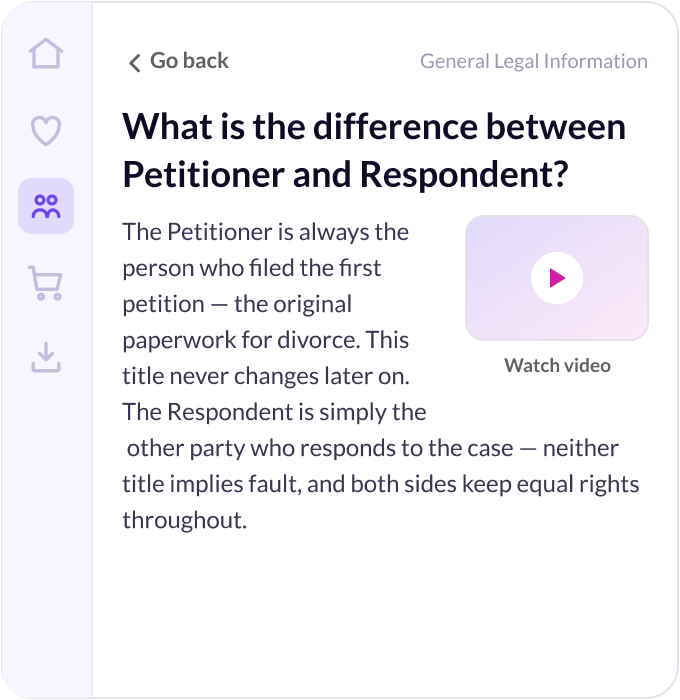
Plain English. Change anything. Ask us anything.
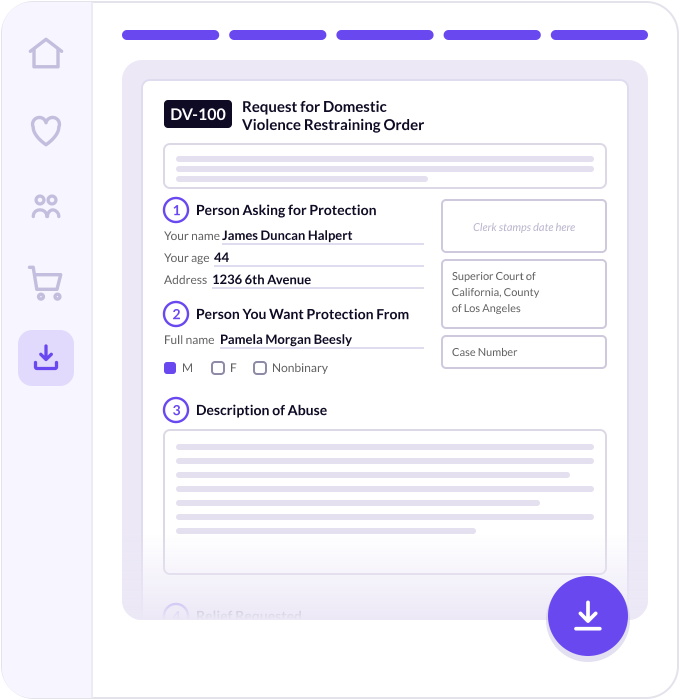
A few plain questions to get started.
Built for California
Family law is local. A filing that flies in San Francisco gets kicked back in San Bernardino. We know the quirks of all 58 California counties — because we've walked into all of them.

One flat price
One honest number for the whole case. Tell us what you're doing — we'll show you exactly what it costs, whether you're filing first or answering your ex's paperwork.
Questions, honestly answered
If yours isn't here, write us. A human will answer, usually the same day.
The moment a California divorce is filed and served, standard restraining orders printed on the summons take effect for both spouses. They generally prohibit transferring or hiding property outside the ordinary course of life, changing insurance beneficiaries, and taking the children out of state without consent. They're automatic — but they're general. Property control orders are how you get specific rules for your specific situation.
No — and the distinction matters. Property control orders are temporary: who lives in the house, who drives the car, who pays the mortgage while the case is pending. The final division of property happens later, at settlement or judgment. Temporary control doesn't decide final ownership.
In California, property acquired during the marriage is generally community property regardless of whose name is on it — and temporary orders about use, possession, and bills are made based on the family's actual circumstances. Whose name is on the title is a fact the court considers, not the final word.
That depends entirely on what orders exist in your case — which is exactly why people ask for an exclusive-use order instead of guessing. Acting first and asking later can backfire. This is a genuinely good question for an attorney consultation, which you can add anytime.
California law treats pets better than luggage: courts can make orders about who cares for a pet — including while the case is pending — considering the pet's well-being. If the dog matters to you, it can be part of your request.
No. Courts can order an accounting of what happened to funds, factor improper transfers into the eventual division, and put controls on what remains. The sooner it's in front of the judge, the better — every month of silence makes the trail colder.
The FL-300 Request for Order is the vehicle, usually with a supporting declaration describing the property and the orders you want, and — when money orders are involved — a current FL-150 Income & Expense Declaration. Our wizard assembles the right set from your answers.
A regular Request for Order is typically heard within several weeks depending on the county. If property is about to disappear — a sale in progress, an account being emptied — California's emergency (ex parte) process can put temporary orders in place within a day or two, until a full hearing.
No — we're a licensed and bonded Legal Document Assistant service. We prepare your paperwork, and every step of our wizard is reviewed and approved by attorneys licensed in your state. If you'd like one-on-one legal advice, you can add an attorney consultation anytime.
Filling out your forms is free — you pay one flat price when you're ready to download or file, with payment plans available. Compare that to what a retainer costs while you're already fighting about money, and you'll see the point.
Solid ground
Watching accounts, mail, and log-ins like a security guard for your own life is exhausting — and it doesn't actually protect anything.
Let Legalfina prepare your property control paperwork quickly, affordably, and on your terms.
 Refer your friends
© 2021 - 2026 Legalfina Inc. All rights reserved.
LDA License #172 (Alameda County)
35111F Newark Blvd #314, Newark, CA
408-673-0810
