1
Tell us what you want
A short conversation. No judgment, no jargon.
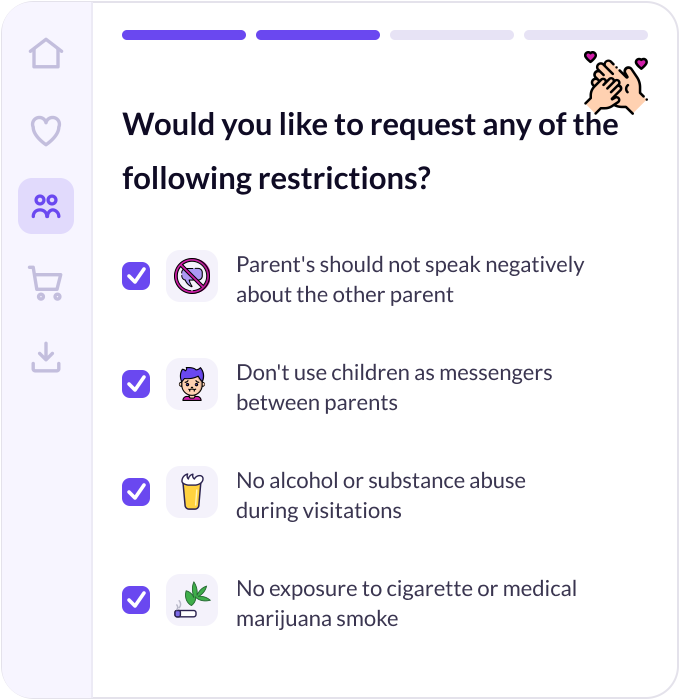

Court-Ordered Safeguards Can.

Parenting Time Safeguards
You can't control what happens at the other house — but the court can attach real, enforceable conditions to parenting time. Here's what parents most often ask for:
Ask that the other parent not use alcohol or non-prescribed drugs during — and for a set number of hours before — their parenting time.
Ask the court to order testing, and to spell out what happens to parenting time if a test is missed or failed.
Ask that visits happen with a professional monitor or an approved adult present, at a visitation center or another safe setting.
Ask that specific people — or any unapproved guests — not be present during the children's time with the other parent.
Ask for handoffs at school, a police station lobby, or another neutral public spot, with clear rules about who can be there.
Ask for orders that neither parent disparage the other — or discuss the court case — in front of the children.
Where safety calls for it, ask for conditions about securing or removing firearms during the children's time in the home.
Licensed, insured drivers only; proper car seats; no driving under the influence with kids in the car — details a court can order.
Ask that a parent complete co-parenting classes or counseling, or that the children get counseling support of their own.
Safeguards are granted on facts, not fears — the judge needs specifics: what happened, when, and what order would prevent it. Our wizard turns what you've lived through into the structured, specific declaration a court can act on.
We meet you where you are
The hardest part of co-parenting is the hours you can't see. If something about the other house keeps you up at night, family courts can attach real, enforceable conditions to parenting time. Start with the sentence that sounds like yours.
 Courts regularly order that a parent not use alcohol or non-prescribed drugs during — and for a set period before — parenting time, and can order testing to back it up. You don't have to prove addiction; you have to ask clearly for a specific, reasonable safeguard.
 A new partner with a record, a roommate you've never met, a relative with a history — you can ask that specific people, or any unapproved adults, not be present during the children's time with the other parent.
 Licensed and insured drivers only, proper car seats, no driving after drinking — transportation rules are among the most practical safeguards a court can order, and among the easiest to state clearly.
 You're not powerless, and you're not overreacting by taking it seriously. Supervised visitation, counseling, and exchange rules all exist for this. The court can only act on what it's told — your declaration is where what you've noticed becomes something a judge can act on.
 Non-disparagement orders — that neither parent bad-mouth the other or discuss the court case in front of the kids — are commonly requested and commonly granted. It won't change who your ex is, but it draws a line the court can enforce.
 You can ask for exchanges at school, curbside-only handoffs, a police station lobby, or another neutral public place — with clear rules about who may be present. Calm, scripted exchanges are one of the most immediate improvements an order can buy your kids.
Answer plain questions about what's been happening — we turn them into a court-ready Request for Order with your requested safeguards stated clearly. Nothing is filed until you say so, and every form carries our 100% court-acceptance guarantee.
Before you go it alone
Safeguard requests fail most often not because the concern isn't real, but because it reaches the judge as a jumble — the wrong boxes checked, a venting declaration, and no clearly stated ask.

An FL-300 rarely files alone — one missing companion form and the clerk can bounce the whole packet.

Those boxes decide what the judge is asked to order. The wrong one gets your request misread — or denied.

Judges read hundreds of pages a day. A declaration that vents instead of explains buries your ask.

Served the wrong way, or a day late, and your hearing slips while the problem keeps going.
This is exactly why people hand us the paperwork: every form picked, filled, and consistent — for one flat price, with our 100% court-acceptance guarantee.

Why we exist
We built Legalfina because you shouldn't have to spend $4,000 on a lawyer to fill out a form. Attorneys are worth every dollar for the hard stuff — standing up for you in court, fighting a truly contested case. But filing your initial divorce, custody, or restraining-order paperwork isn't that. It's the same court-accepted result, without the bill.
The process
A short conversation. No judgment, no jargon.
Every form and every question, answered in plain English you actually understand.
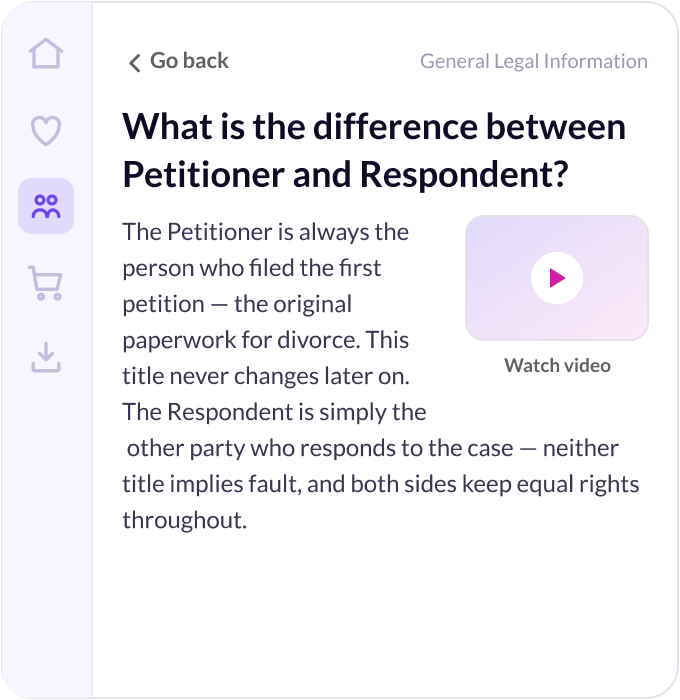
Plain English. Change anything. Ask us anything.
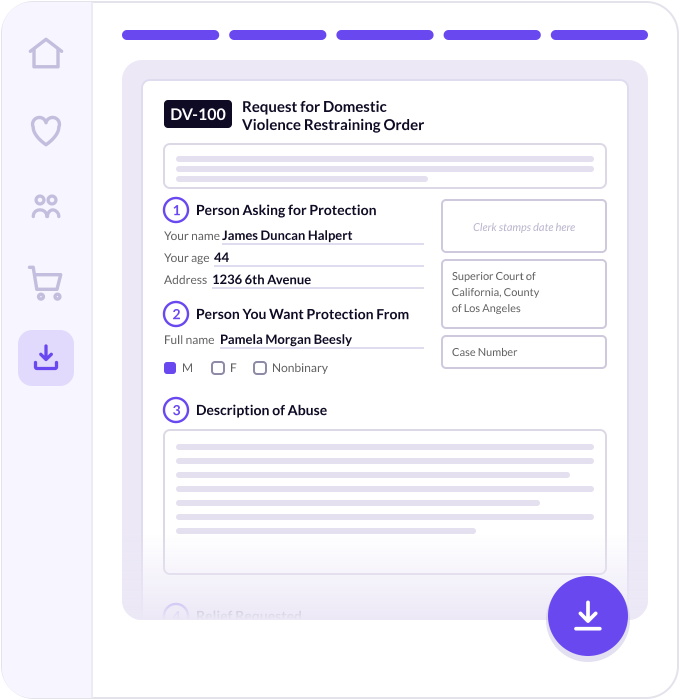
A few plain questions to get started.
Built for California
Family law is local. A filing that flies in San Francisco gets kicked back in San Bernardino. We know the quirks of all 58 California counties — because we've walked into all of them.

One flat price
One honest number for the whole case. Tell us what you're doing — we'll show you exactly what it costs, whether you're filing first or answering your ex's paperwork.
Questions, honestly answered
If yours isn't here, write us. A human will answer, usually the same day.
More than most parents realize: no alcohol or drugs before and during visits, drug and alcohol testing, supervised visitation, exchange locations and rules, who may (and may not) be around the children, transportation requirements, non-disparagement, counseling and parenting classes, and more. If a condition is specific, reasonable, and tied to the children's wellbeing, it can be requested.
You need facts, not a private investigator. Your own declaration — what you've seen, heard, and dealt with, described specifically with dates and details — is evidence the court considers. What sinks requests isn't lack of surveillance footage; it's vagueness. Our wizard asks the questions that draw the specifics out, and you can add an attorney review before filing.
Courts expect parents to raise genuine safety concerns — protecting children is the court's own first priority. What reads poorly is insult and speculation; what reads well is specific facts and a reasonable, child-focused request. That difference is mostly a paperwork problem, and it's exactly the one we solve.
The court can require a professional monitor (paid hourly, often at a visitation center) or approve a trusted adult — a grandparent, a family friend — as the supervisor. The order spells out who supervises, where, and for how long, and it can be revisited later as circumstances change.
The judge decides, and you can ask for the allocation you think is fair — commonly the parent whose conduct made the safeguard necessary, or a split. It's one more box that needs to be requested correctly rather than assumed.
If your children are in immediate danger, call 911 — paperwork is never step one in an emergency. For urgent-but-not-911 situations, California courts have an emergency (ex parte) process that can put temporary orders in place within a day or two, until a full hearing.
No. Safeguards are conditions attached to parenting time in a family law case. A restraining order is a separate, stronger protection for situations involving abuse, threats, stalking, or harassment. If that's closer to your situation, we prepare domestic violence restraining order paperwork too — and if you're unsure which fits, a consultation can help you sort it.
Violations of a court order have real consequences: you can document them and ask the court to enforce the order, tighten the safeguards, or change the parenting arrangement. That enforceability is the entire difference between a court-ordered condition and a request you once made in a text message.
No — we're a licensed and bonded Legal Document Assistant service. We prepare your paperwork, and every step of our wizard is reviewed and approved by attorneys licensed in your state. If your situation needs one-on-one legal advice, you can add an attorney consultation anytime.
Filling out your forms is free — you pay one flat price when you're ready to download or file, with payment plans available. The court's filing fee is separate, and if it's a hardship we prepare the fee waiver paperwork too.
Their safety, in writing
Counting the hours until they're home, interrogating the silence in the back seat — that constant low-grade fear isn't something you should have to normalize.
Let Legalfina prepare your child-safeguard paperwork quickly, affordably, and on your terms.
 Refer your friends
© 2021 - 2026 Legalfina Inc. All rights reserved.
LDA License #172 (Alameda County)
35111F Newark Blvd #314, Newark, CA
408-673-0810
