1
Tell us what you want
A short conversation. No judgment, no jargon.
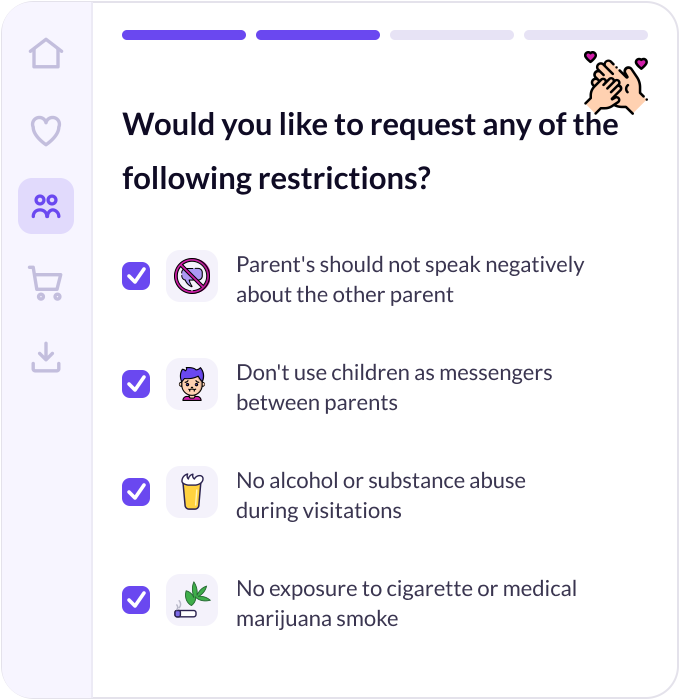

We'll Help You Tell the Judge Exactly What You Want.

Custody & Visitation Orders
When parents can't agree, the court can step in and make it official. Here's what parents most often request:
Who makes the big decisions — school, medical care, religion. Ask for joint or sole legal custody, with your reasons laid out clearly.
Where the children live day to day. Ask for the arrangement you believe serves your kids best, from primary to fully shared.
Exact days, times, and overnights — a written schedule everyone can plan around, and that the court can enforce.
Alternating Thanksgivings, summer breaks, birthdays — ask for a holiday plan that ends the annual argument before it starts.
When safety is a concern, ask that visits happen with a professional monitor or a trusted adult present.
Where exchanges happen, who drives, what happens when someone is late — the details that keep handoffs calm.
Ask that the children not be taken out of the county, state, or country without written consent or a court order.
Which school district, which doctor, whether a child starts therapy — ask the court to settle the decisions you can't agree on.
Custody requests often call for more than one form — our wizard selects and completes everything automatically, so nothing is missing when you file.
We meet you where you are
Custody worries don't keep office hours. Some of these fears are everyday frustrations; some are the kind that keep you checking the driveway at 2 a.m. Whichever sentence below is yours — that's exactly where we'll start.
 Without a court order, there's usually no schedule anyone has to follow and nothing a school or police officer can enforce. A first custody order turns "the arrangement" into actual rules. We prepare the Request for Order and custody attachments that ask the court to set them.
 Late pickups, canceled weekends, plans that change the night before. A court-ordered parenting schedule sets the days, times, and holidays — and once it's an order, following it isn't a favor anymore. You can also ask for make-up time rules and consequences for no-shows.
 This fear keeps more parents awake than any other — and courts take it seriously. You can ask for travel restrictions, passport controls, and abduction-prevention orders. The paperwork is how that fear becomes protection.
 You can ask the court for safeguards: no unapproved adults during parenting time, supervised visits, safe exchange locations. Judges act on clear, specific facts — which is exactly what our wizard helps you lay out, calmly and in the right place.
 Move-aways are among the most consequential custody situations there are, and the orders that exist before a move matter enormously. Many parents ask the court for orders while it's still a conversation — not after the boxes are packed.
 Without a visitation order, your time with your children depends on someone else's mood. You can ask for defined parenting time — regular days, overnights, video calls, holidays — so being their parent doesn't require permission.
 Kids grow, jobs change, people move. Custody and visitation orders can be modified when circumstances genuinely change — and the request is the same process, showing the court what's different now and what schedule fits today.
Answer plain questions about your kids and your situation — we turn them into a court-ready Request for Order with every custody attachment filled in. Nothing is filed until you say so, it's free to start, and every form carries our 100% court-acceptance guarantee.
Before you go it alone
Custody paperwork carries the highest stakes of all: vague requests produce vague orders, and a missed attachment can mean the judge legally can't grant what you actually needed.

An FL-300 rarely files alone — one missing companion form and the clerk can bounce the whole packet.

Those boxes decide what the judge is asked to order. The wrong one gets your request misread — or denied.

Judges read hundreds of pages a day. A declaration that vents instead of explains buries your ask.

Served the wrong way, or a day late, and your hearing slips while the problem keeps going.
This is exactly why people hand us the paperwork: every form picked, filled, and consistent — for one flat price, with our 100% court-acceptance guarantee.

Why we exist
We built Legalfina because you shouldn't have to spend $4,000 on a lawyer to fill out a form. Attorneys are worth every dollar for the hard stuff — standing up for you in court, fighting a truly contested case. But filing your initial divorce, custody, or restraining-order paperwork isn't that. It's the same court-accepted result, without the bill.
The process
A short conversation. No judgment, no jargon.
Every form and every question, answered in plain English you actually understand.
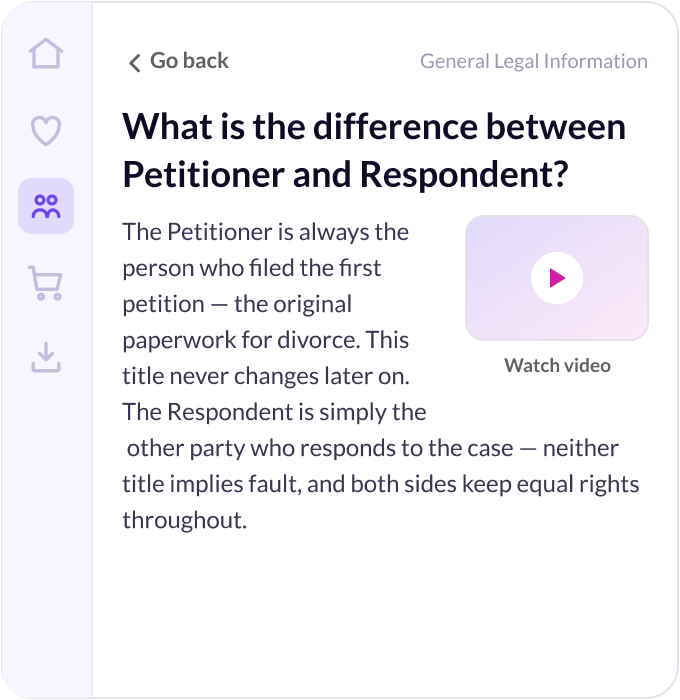
Plain English. Change anything. Ask us anything.
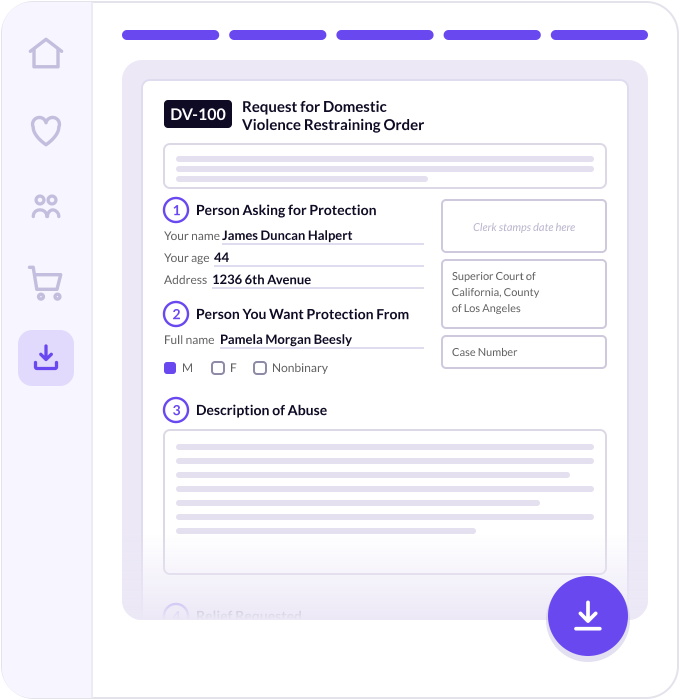
A few plain questions to get started.
Built for California
Family law is local. A filing that flies in San Francisco gets kicked back in San Bernardino. We know the quirks of all 58 California counties — because we've walked into all of them.

One flat price
One honest number for the whole case. Tell us what you're doing — we'll show you exactly what it costs, whether you're filing first or answering your ex's paperwork.
Questions, honestly answered
If yours isn't here, write us. A human will answer, usually the same day.
Legal custody is decision-making power — school, medical care, religion. Physical custody is where the children actually live. Each can be joint (shared) or sole, in any combination: parents can share legal custody while one has primary physical custody, and every other mix in between. Your request tells the court which arrangement you're asking for, and why.
Yes. Custody and visitation orders are made in parentage (paternity) cases just like in divorces. If no case exists yet, our wizard helps you open one and request custody orders inside it.
The request is made on form FL-300, almost always with the FL-311 (Child Custody and Visitation Application Attachment), and sometimes additional attachments for holiday schedules, supervised visitation, or abduction prevention. Missing an attachment is the classic DIY mistake — our wizard picks and fills every one your request needs.
No. California law requires custody decisions to be based on the children's best interest — not on the parent's gender. What moves a judge is a clear, specific, child-focused request. That's true for mothers and fathers alike, and it's exactly what your paperwork is for.
It's the standard California judges must apply. It centers on the children's health, safety, and welfare, the amount and quality of contact with both parents, and factors like any history of abuse or substance use. Your declaration is where you connect what you're asking for to these factors — clearly, not angrily.
Before any order exists, both legal parents generally have equal rights to the children — which is precisely why parents who worry about this ask the court for orders early. You can request travel restrictions and, where the risk is real, abduction-prevention orders. If you believe your children are in immediate danger, call 911 first; paperwork comes second.
A regular Request for Order is typically heard within several weeks, depending on the county. When there's an immediate risk of harm or abduction, California courts have an emergency (ex parte) process that can put temporary orders in place much faster, until the full hearing.
Usually not in the way people picture it. California courts have gentler ways of considering children's input — custody mediation, court services interviews, and judges' discretion about hearing from older children. Most custody hearings are decided on the parents' paperwork and statements.
Yes. As children grow and circumstances change, either parent can ask the court to modify custody or visitation. Courts generally look for a genuine change in circumstances — our wizard helps you lay out what's different and what schedule fits now.
No — we're a licensed and bonded Legal Document Assistant service. We prepare your paperwork, and every step of our wizard is reviewed and approved by attorneys licensed in your state. For one-on-one legal advice — which high-conflict custody cases sometimes genuinely need — you can add an attorney consultation anytime.
An order is enforceable in ways a verbal agreement never is: you can document violations and ask the court to enforce or tighten the order, and repeated violations carry real consequences. That's the whole point of getting it in writing — it gives you something to stand on.
Clarity for your kids
Parenting week to week on someone else's whims is no way to live — and no way for kids to grow up.
Let Legalfina prepare your custody paperwork quickly, affordably, and on your terms.
 Refer your friends
© 2021 - 2026 Legalfina Inc. All rights reserved.
LDA License #172 (Alameda County)
35111F Newark Blvd #314, Newark, CA
408-673-0810
